A Homeowner’s Guide to Bed Bug Inspection
By glen25
Published On January 14, 2026

Finding signs of bed bugs is alarming, but your first move shouldn't be panic—it should be a methodical bed bug inspection. This is the single most important step in solving the problem. It confirms whether you actually have an infestation and tells you exactly what to do next, whether that’s a DIY approach or calling in the pros.
Why a Bed Bug Inspection Is Your Most Critical First Step
Discovering mysterious bites or tiny, rust-colored stains on your bedding can send your mind racing. The first impulse for a lot of Tulsa homeowners is to grab the nearest fogger or spray, hoping for a quick fix. Unfortunately, that reaction usually does more harm than good.
Acting without a confirmed ID is a recipe for wasted time, money, and a whole lot of unnecessary stress.
For one thing, most over-the-counter products just don’t work on modern, pesticide-resistant bed bugs. Using them can actually scatter the insects, pushing them deeper into walls and furniture. A small, localized issue can quickly become a full-blown infestation that’s much harder to treat. You could also be treating the wrong pest entirely. Fleas, carpet beetles, and even some spiders leave signs that are easily mistaken for bed bugs if you don't know what to look for.
Understanding the Reality of Bed Bugs in Tulsa
Let's get one thing straight: a bed bug problem is not a reflection of your home's cleanliness. These pests are expert hitchhikers. They can be carried into any environment, from pristine suburban homes to bustling apartment complexes in Tulsa County, on luggage, secondhand furniture, or even from a neighboring unit. They are simply an unfortunate reality of modern life, and they thrive wherever people are.
The scale of the problem is massive. The global bed bug control service market was valued at around USD 1.2 billion in 2023, a number that shows just how common these infestations have become. For property owners here in Tulsa, these statistics highlight why a proactive bed bug inspection is such a smart move to catch problems before they spiral out of control. You can dig into more of the industry trends on this topic from DataIntelo.
A confirmed identification is the foundation of any effective pest control plan. Without it, you're just guessing. And when you guess with pests, you almost always end up with a bigger, more expensive problem.
The Power of an Informed Approach
Taking a moment to conduct a thorough inspection puts you back in control. Instead of acting on fear, you get to act on facts. A calm, methodical search helps you figure out the scope of the issue, pinpoint hiding spots, and make a clear-headed decision about what to do next.
This guide will walk you through that entire process. We’ll cover everything from doing your own detailed check to understanding what a professional from Pathfinder Pest Control looks for. By starting with a proper inspection, you set yourself up for success and get one step closer to reclaiming your peace of mind.
Before we dive into the "how-to," it's helpful to see the big picture. Many homeowners wonder if they can handle the inspection themselves or if they need to call for help right away. Both have their place, but they're not created equal.
Here’s a quick rundown of what each approach looks like.
DIY vs Professional Bed Bug Inspection at a Glance
| Aspect | DIY Inspection | Professional Inspection (Pathfinder Pest Control) |
|---|---|---|
| Accuracy | Relies on visual checks, which can miss early signs or hidden nests. | Uses trained technicians who know exactly where to look and what signs to spot. |
| Tools | Basic tools like a flashlight and magnifying glass. | Specialized equipment, including borescopes and sometimes K-9 units for high-level detection. |
| Scope | Limited to easily accessible areas like mattresses, box springs, and nearby furniture. | Comprehensive search of the entire room, including wall voids, electrical outlets, and deep furniture crevices. |
| Time | Can take several hours and may need to be repeated if you're unsure. | Typically faster and more efficient, providing a conclusive answer in a single visit. |
| Outcome | Can confirm an obvious infestation but may provide false negatives for smaller ones. | Delivers a definitive confirmation and assessment of the infestation's severity, with a clear action plan. |
While a DIY check is a great starting point for your own peace of mind, a professional inspection is the only way to be 100% certain. An expert sees things the untrained eye will always miss, ensuring nothing gets overlooked.
Your DIY Bed Bug Inspection: Signs, Hiding Spots, and Checklist
Think you might have bed bugs? Taking a deep breath and doing a methodical search is the right first move. This isn't just about spotting a live bug—they're incredibly good at hiding. You need to approach this like a detective, looking for the subtle clues they always leave behind.
Forget a panicked bug hunt. Think of it more like a crime scene investigation where the evidence will point you straight to the culprits. All you need is a good flashlight, maybe a magnifying glass, and a bit of patience.
This simple process shows what I mean: see a sign, inspect the area, and get help if you confirm it.
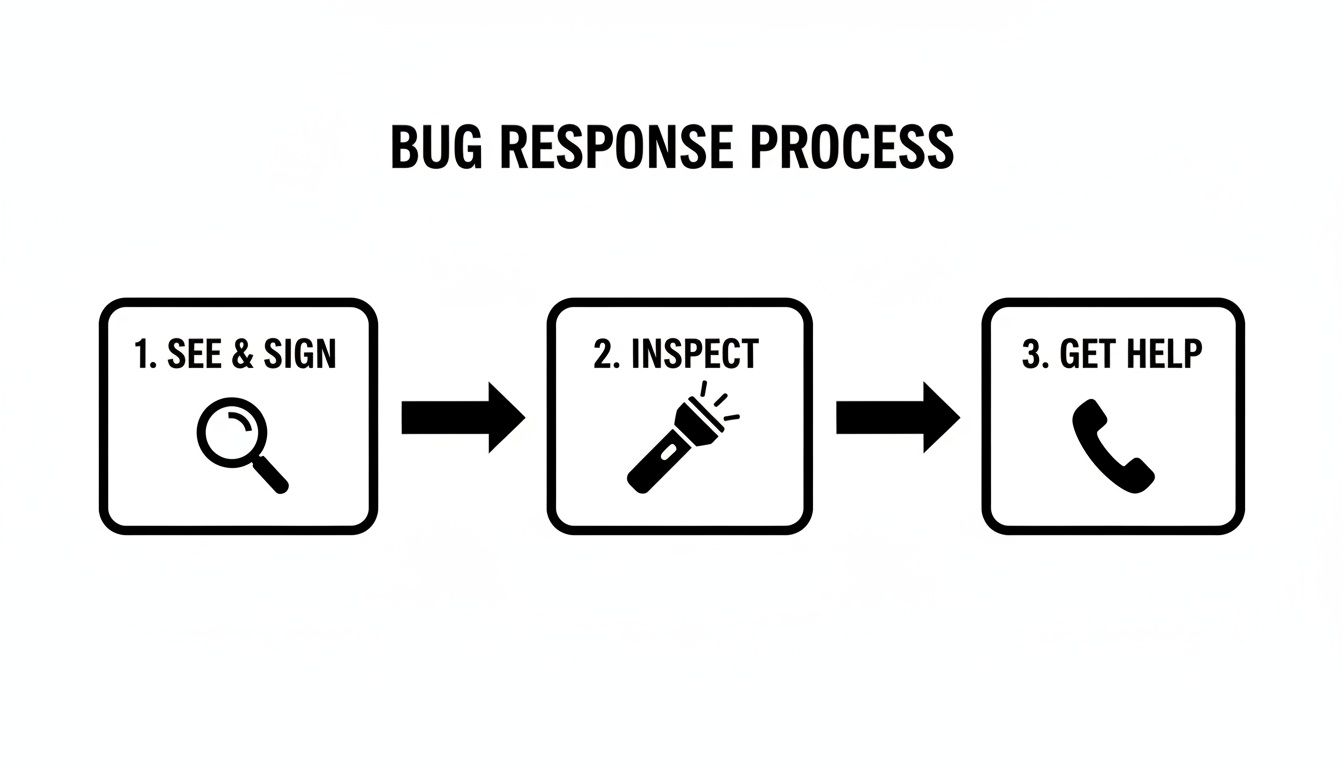
It really comes down to recognizing those first warning signs and taking deliberate action instead of jumping to conclusions.
The Evidence You're Looking For
Before you start pulling your room apart, it helps to know exactly what you're trying to find. The signs are often tiny and easy to miss if you're not looking closely.
Keep your eyes peeled for these tell-tale clues:
- Rust-Colored or Black Stains: These are fecal spots. They look like tiny dots from a fine-tipped marker on sheets, pillowcases, and mattresses. If you wet them, they'll smear.
- Shed Skins (Exoskeletons): As young bed bugs (called nymphs) grow, they molt and leave behind their old skins. These look like translucent, yellowish shells and you'll often find them along mattress seams or in furniture joints.
- Tiny White Eggs: Bed bug eggs are miniscule—about the size of a pinhead. They're pearly white and usually laid in tight clusters inside dark cracks and crevices.
- Live Bugs: An adult bed bug is flat, oval-shaped, and reddish-brown, roughly the size of an apple seed. The nymphs are smaller and can be almost transparent, making them much harder to spot.
Your Search Zone: The Bedroom
The bedroom is almost always ground zero. Bed bugs want to stay close to their food source (that's you!), so the inspection should start on and around your bed. Check each area thoroughly before moving on.
Start by carefully stripping all the bedding—sheets, blankets, pillowcases—and examining every inch for the signs I just mentioned. Pay extra attention to the seams and folds where things can hide.
Next, it's time to inspect the mattress itself. A great tip is to use a credit card or another stiff, thin object to run along the piping and seams. This can pop out any hidden bugs, eggs, or skins. Flip the mattress over and give the underside the same detailed look. Don't forget to check the tags and labels; they're a surprisingly common hiding spot. The box spring is just as important. If you can, remove the fabric dust cover on the bottom to get a look at the interior frame.
A huge mistake people make is stopping after they've checked the mattress. Bed bugs are only found on the bed itself about 20% of the time. The other 80% are hiding somewhere nearby.
Expanding Your Inspection Perimeter
Once you've given the bed a thorough once-over, it's time to broaden your search. Bed bugs will travel several feet away from the bed to find a safe place to hide during the day.
- Bed Frame and Headboard: If you can, take the bed frame apart and inspect every joint, screw hole, and crevice. Pull the headboard away from the wall and check both the front and back.
- Nightstands and Dressers: Empty the drawers completely. Inspect them inside and out, especially the joints and runners. It’s also a good idea to flip the furniture over to check the underside.
- Upholstered Furniture: Any chairs, couches, or ottomans in the room offer countless hiding spots. Check the cushions, seams, skirts, and dig into the interior frame if you can.
- Less Obvious Hiding Spots: This is where a truly thorough bed bug inspection makes a difference. Grab your flashlight and start checking these often-missed locations:
- Behind loose wallpaper or sections of peeling paint.
- Around electrical outlets and switch plates (be extremely careful here).
- In the folds and seams of curtains.
- Along the junction where the wall meets the ceiling.
- Inside books, clocks, phones, and other electronics on your nightstand.
By being methodical and checking these less obvious areas, you dramatically increase your chances of finding conclusive proof. If your search confirms your fears, resist the urge to grab a can of bug spray from the store. Your very next step should be calling a professional who can assess the true scope of the problem and create a treatment plan that actually works.
What to Expect From a Professional Inspection
When your own search leaves you with more questions than answers, it's time to call in a professional. Getting a bed bug inspection isn’t giving up; it’s the smartest move you can make for a conclusive diagnosis. A licensed technician from a company like Pathfinder Pest Control brings a level of expertise and equipment that just isn't available to the average homeowner in Tulsa.
Our trained eyes know how to spot the subtle evidence that’s easily missed, like nearly invisible nymphs or well-camouflaged eggs tucked deep inside furniture joints. We understand how these pests behave—how they migrate, where they hide during the day, and what environmental factors draw them out.
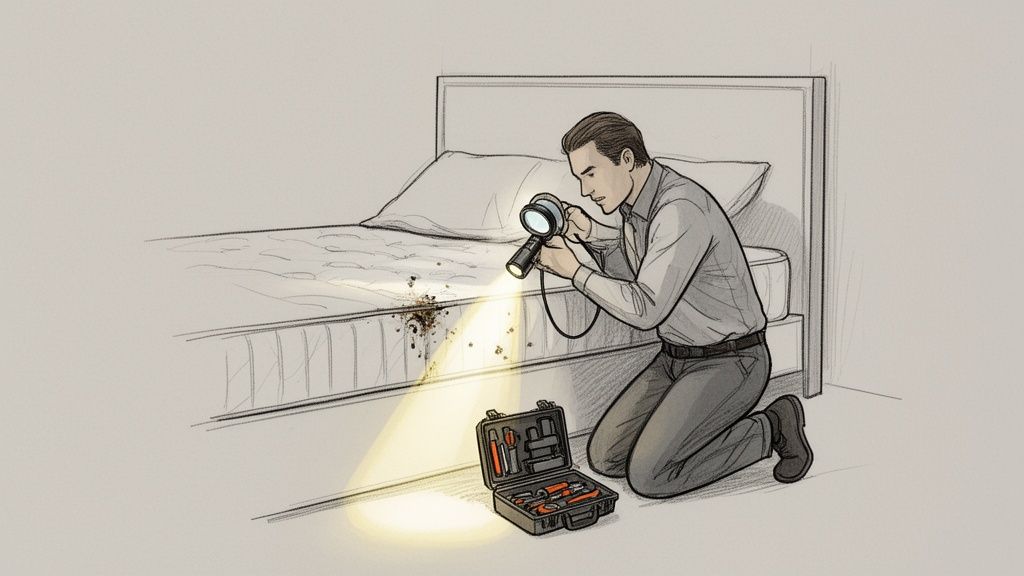
This experience is backed by specialized tools designed to uncover even the most secretive infestations.
Tools of the Trade
While a flashlight is a good start for a DIY check, a professional technician arrives with a much more advanced toolkit. These tools allow for a far deeper and more accurate assessment of your home.
- High-Intensity LED Flashlights: These are much more powerful than standard flashlights, casting bright, clear light that reveals the slightest movement or discoloration in dark crevices.
- Magnification Tools: We use magnifying lenses for a closer look at suspected eggs, shed skins, or fecal stains. This helps confirm what they are and distinguishes them from simple household lint or debris.
- Borescopes: In some cases, we might use a borescope—a tiny camera on a flexible tube—to see inside wall voids, behind baseboards, or deep within furniture frames without causing any damage.
These tools aren't just for show. They allow us to follow the evidence right to the source and figure out the full extent of the problem, which is the cornerstone of any successful treatment plan.
Why a Professional Eye Matters
One of the biggest challenges for homeowners is correctly identifying what they're dealing with. It’s a common scenario: a professional gets called out for one issue only to discover another. In fact, a staggering 84 percent of pest control professionals were initially contacted about a different type of pest before they correctly identified the problem as bed bugs. It just goes to show how easily the signs can be misinterpreted.
This high rate of misidentification is exactly why professional confirmation is so critical. Demand for these services is at an all-time high, with 97 percent of pest professionals having treated for bed bugs in the last year, mostly in single-family homes and apartments. You can dig into more data on these 2024 bed bug trends to see just how widespread this issue has become.
A professional inspection from Pathfinder Pest Control isn't just about finding bugs. It's about giving you certainty and a clear, effective path forward. We eliminate the guesswork so you can focus on the solution.
The Inspection Process Explained
When one of our Tulsa technicians visits your home, they’ll conduct a methodical and systematic search designed to be thorough yet minimally disruptive.
First, we’ll start with a conversation. You can tell us what you’ve seen, where you’ve noticed bites, and any other concerns you have. Your firsthand account gives us a valuable starting point.
Next, the physical inspection begins, usually in the primary suspect area like a bedroom. The technician will examine:
- The Bed and Surrounding Area: This is a detailed check of the mattress, box spring, bed frame, and headboard.
- Adjacent Furniture: We’ll carefully inspect nightstands, dressers, and upholstered chairs, which includes emptying drawers and checking the undersides.
- The Room's Perimeter: Baseboards, carpet edges, window and door frames, and even electrical outlets are common hiding spots we check.
- Adjacent Rooms: Depending on what we find, the inspection might extend to adjoining rooms to determine if the infestation has spread.
After the inspection, our technician will walk you through their findings in plain language. They’ll confirm whether bed bugs are present, explain the severity of the infestation, and recommend a clear treatment plan tailored to your situation. This professional diagnosis is the only reliable foundation for getting rid of them for good.
How to Prepare Your Home for a Thorough Inspection
Whether you’re getting ready for a DIY deep dive or you've got one of our pros from Pathfinder Pest Control on the way, a little prep work goes a long way. Setting the stage properly is the key to a successful bed bug inspection, because it ensures no hiding spot gets missed.
The single biggest thing you can do is cut down on clutter. Piles of clothes, stacks of books, and general mess on the floor give bed bugs an endless supply of places to hide. When you clear that stuff away, you force them into more predictable spots, which makes finding them a whole lot easier.
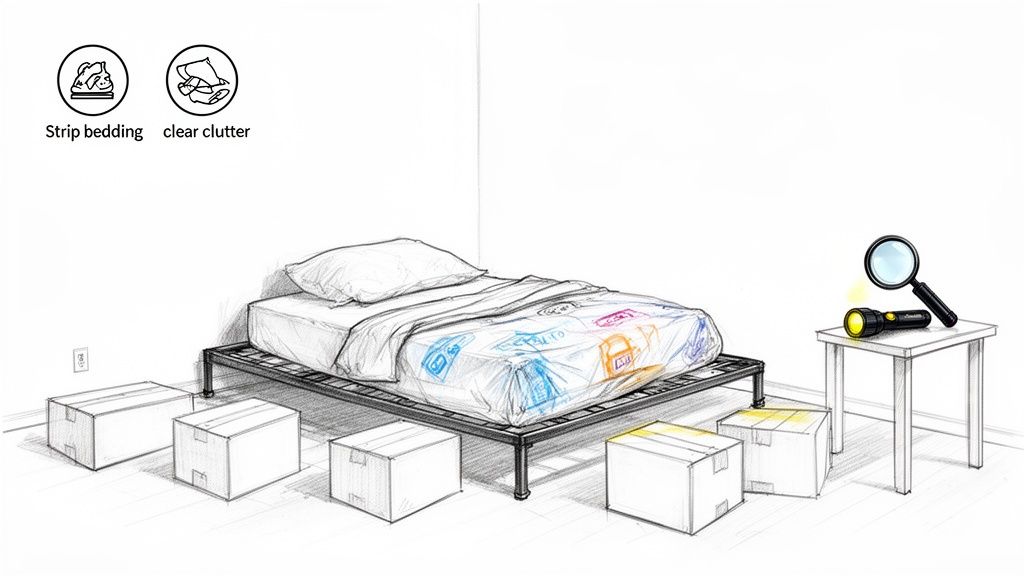
But here's a word of caution: declutter smart. A common mistake people make is moving items from a potentially infested room straight into another part of the house. That’s a surefire way to spread the problem. Instead, sort and bag everything in sealed plastic bags or bins before you move it out of the room.
Creating Clear Access to Key Areas
For a truly thorough inspection, we need to be able to see and reach everything. Think of it as giving the inspector—whether it's you or us—a clear path to every crack and crevice.
The bed is ground zero, so start there.
- Strip All Bedding: Carefully take off all sheets, blankets, comforters, and pillowcases. Don't just carry them through the house; put them directly into sealed plastic bags to prevent any hitchhikers from dropping off along the way.
- Wash and Dry on High Heat: Tumble that bagged bedding straight into the washing machine on a hot cycle. Afterward, dry everything on the highest heat setting for at least 30 minutes. That kind of heat is lethal to bed bugs and their eggs.
With the bed stripped, turn your attention to the rest of the furniture and the room’s perimeter. The goal here is to get a 360-degree view of every piece of furniture.
Don’t just clear the top of your nightstand—clear the area around it. The goal is to eliminate shadows and obstructions so every crack and crevice can be seen with a flashlight.
Your Pre-Inspection Checklist
Follow these steps to get your space ready. A little bit of prep can easily cut inspection time in half and make the whole process far more accurate.
- Empty Under-Bed Storage: Pull out any boxes, bins, or other items you have stored under the bed. Give them a quick look for any signs of bugs before you move them.
- Pull Furniture from Walls: This is a big one. Move your headboard, dressers, nightstands, and anything else against a wall at least two feet out. This creates the space needed to inspect the back and bottom of everything.
- Clear Closets and Drawers: You don't have to empty the entire closet, but make sure the floor is clear. For dressers and nightstands near the bed, it’s a good idea to empty the drawers so we can check the joints and interior framework.
- Secure Pets: If one of our technicians is coming over, please make sure your pets are secured in another room or a crate. It keeps them safe and helps our team focus without distractions.
- Have Tools Ready: If you're doing this yourself, gather your tools first. You’ll want a high-powered flashlight and a magnifying glass right by your side.
By taking these steps, you're doing more than just tidying up; you're playing an active role in the bed bug inspection. This prep work leads to a faster, more thorough search and, ultimately, a much better shot at wiping them out for good.
When DIY Treatments Fail and It’s Time to Call a Pro
After your bed bug inspection confirms your worst fears, the first impulse is usually a mad dash to the hardware store for a fogger or spray. It’s a completely understandable reaction, but honestly, it’s one of the biggest mistakes you can make. DIY treatments often backfire in a spectacular way, turning what might have been a manageable problem into a widespread nightmare.
Most of these over-the-counter products just aren't designed for an enemy as tough as the modern bed bug. When you set off a fogger, you’re not killing the colony—you’re just chasing them off. The bugs simply scatter deeper into hiding spots like wall voids, electrical outlets, and behind baseboards, where the fog can't reach.
This scattering effect is a huge problem. Now, instead of an infestation contained to one bedroom, you have smaller, much harder-to-find colonies setting up shop in multiple rooms. You've basically encouraged them to expand their territory throughout your home.
The Science of Bed Bug Resilience
The core issue here is that bed bugs have evolved. These aren't the same pests our grandparents dealt with. Decades of exposure to common chemicals have created populations that are incredibly difficult to kill with standard pesticides.
This isn't just a theory; it's a documented biological fact. The main reason this crisis persists is the evolution of pesticide resistance among bed bug populations. These pests have developed resistance to most major classes of insecticides, including pyrethroids—one of the most common active ingredients—and even DDT. Research shows that many common insecticide treatments have become largely ineffective against them. You can dig into the full research on bed bug pesticide resistance if you want to see the science behind this challenge.
What this means for you is that even if you spray a bug directly, there’s a good chance it will just walk away. Meanwhile, its hidden relatives continue breeding, completely unfazed by your efforts.
Clear Signs It Is Time for Professional Help
So, when do you throw in the towel on the DIY fight? The signs are usually pretty obvious and point to an infestation that has moved way beyond a simple, localized issue. At this stage, a professional bed bug inspection and treatment plan aren't just an option—they're a necessity.
You absolutely need to call a pro if you notice:
- Evidence in Multiple Rooms: Finding shed skins, fecal stains, or live bugs in more than one room is a major red flag. This means the infestation has already spread, and you need a targeted, whole-home approach.
- Continuous Bites Despite Treatment: If you’re still waking up with new bites days or weeks after using store-bought products, it's a clear signal your efforts have failed. The bugs are still active and feeding.
- Bugs on Couches or Chairs: Discovering bed bugs in your living room furniture means the problem is no longer confined to the bedroom. They’ve established colonies in other high-traffic areas of your home.
- Visible Bugs During the Day: Bed bugs are nocturnal. If you see them crawling on walls or furniture in broad daylight, it often signals a very large and overcrowded infestation.
Attempting to handle a widespread infestation with DIY products is like trying to put out a house fire with a squirt gun. At this stage, you need the expertise and specialized tools that only a professional pest control company can provide.
Ignoring these signs only allows the population to grow, making the eventual professional treatment more complex and more expensive. If your situation matches any of these scenarios, it’s time to stop fighting a losing battle. The most effective step you can take is to contact Pathfinder Pest Control for a definitive solution. Our licensed Tulsa technicians have the training and materials to eliminate the entire infestation, not just scatter it.
Common Questions About Bed Bug Inspections
Even after learning the ins and outs of a bed bug inspection, it’s natural to have a few questions. The whole process can feel a little overwhelming, and getting clear answers is the first step toward getting your peace of mind back. Here in Tulsa, we hear the same concerns from homeowners time and again, so we've gathered them here to give you the clarity you need.
Knowing these details helps take the mystery out of it, whether you're trying to figure out if you should do an initial search yourself or you're getting ready for one of our technicians to visit. It’s all about knowing what to expect so you can make the right call.
How Long Does a Professional Bed Bug Inspection Take?
This is easily one of the most common questions we get, and the honest answer is: it depends. The two biggest factors are the size of your home and the amount of clutter we have to work through. For a typical home here in the Tulsa area, one of our licensed Pathfinder Pest Control technicians usually needs between 30 and 90 minutes for a truly thorough inspection.
We're not just taking a quick peek at the mattress. A real professional inspection is a methodical search of the entire room—that means the bed frame, headboard, nightstands, dressers, baseboards, and even the edges of the carpet. We also check the rooms right next to the problem area to see if the infestation has started to spread. Our priority is accuracy, because a solid diagnosis is the only way to build a treatment plan that actually works the first time.
A rushed inspection is a worthless inspection. We take the time to be meticulous because missing a single hiding spot can lead to a re-infestation down the road.
Can I See Bed Bugs with My Naked Eye During an Inspection?
Absolutely. Adult bed bugs are definitely big enough to see without any special equipment. An adult is reddish-brown, flat, oval-shaped, and about the size of an apple seed. If you have a decent-sized infestation, you'll likely spot them if you know where to look.
The real challenge is spotting the younger ones. Bed bug nymphs are much smaller and can be almost translucent until they've had a meal, which makes them incredibly tough to see, especially on light-colored fabrics. The eggs are even tinier—about the size of a pinhead—and are usually laid in tight clusters deep inside dark cracks and crevices. So, while you might spot an adult, a professional is trained to find all the evidence, from eggs to adults, which is critical for total eradication.
What Should I Do If I Find Evidence of Bed Bugs?
Finding proof of bed bugs can be pretty alarming, but the most important thing is to avoid panicking. What you do next can either help or make things much worse. Fight the urge to start dragging furniture out of the room or dousing everything with over-the-counter sprays. Both of these actions can actually cause the bugs to scatter and spread into other parts of your home.
Instead, take these calm, deliberate steps:
- Document Everything: If you can, use a piece of clear sticky tape to capture a bug, shed skin, or eggs. Seal the tape inside a plastic baggie.
- Take Clear Photos: Your phone is your best friend here. Snap clear pictures of what you found and exactly where you found it. This is a huge help when you call a professional.
- Call for Professional Help: This is the most important step. Get in touch with a licensed company like Pathfinder Pest Control immediately. Don't use any store-bought chemicals, as they often make the problem harder for us to solve and can interfere with professional treatments.
Will a Professional Inspect My Entire House?
A comprehensive bed bug inspection always kicks off in the room where you've seen activity or gotten bites, which is usually a bedroom. But it rarely stops there. Bed bugs are notorious travelers and can easily move through wall voids, along pipes, or by hitching a ride on your clothes to other rooms.
At Pathfinder Pest Control, our technicians will systematically inspect the main problem area and then broaden the search to include any adjoining rooms, hallways, and even rooms on different floors. Bedrooms and living areas with couches and upholstered chairs get the most attention, but we assess the entire property to map out the full scope of the problem. Getting that complete picture is the only way to create a treatment plan that ensures they don't just relocate and start all over again. For more expert tips on pest management, check out the resources available in our new articles section.
When you need a definite answer and a clear path forward, don't leave it to guesswork. The licensed technicians at Pathfinder Pest Control have the expertise and tools to conduct a thorough bed bug inspection and create a targeted treatment plan for your Tulsa home. Schedule your inspection today and take the first step toward reclaiming your peace of mind.
Article created using Outrank
Related Posts
Book Bed Bug Exterminator in Tulsa Today
If you suspect bedbugs in your home, professional help can eliminate the problem quickly. Our team provides trusted bed bug extermination in Tulsa with solutions tailored to your property.
Contact Pathfinder Pest Control today to schedule a bed bug inspection and protect your home with expert bed bug control in Tulsa.
Need More Help?

Mikkel Henderson
About The Author
Hi, I am Mikkel Henderson, owner of Pathfinder Pest Control. Over the years, I worked directly with homeowners and businesses in Tulsa. Me and my team helped them to get rid of all kinds of pests such as bed bug, cockroach, rodents, ants & termites.
On this website, I share real experience advice and write guides so you can better understand pest issues. In my free time, I like to spend time outdoors and enjoy a bit of fishing.