How to Get Rid of Bed Bugs Fast: A Quick Guide (how to get rid of bed bugs fast)
By glen25
Published On January 16, 2026
That moment of panic is unforgettable. You spot a tiny bug crawling on your sheets or find a suspicious reddish-brown stain on your pillowcase, and your mind immediately jumps to the worst conclusion. Before you do anything else—before you start frantically spraying chemicals or dragging your mattress to the curb—take a breath. What you do in the next 60 minutes is critical.
Panicking is the fastest way to turn a small problem into a whole-house nightmare. Moving bedding, clothes, or furniture from room to room can spread the infestation before you even know what you’re dealing with. Right now, the goal isn’t total elimination; it’s smart, strategic containment. A single pregnant female bed bug can lay hundreds of eggs, so every second counts.
Your Immediate Bed Bug Action Plan
The first step isn’t to kill the bug, it’s to confirm what you’re up against. Bed bugs have plenty of lookalikes, from carpet beetles to booklice, and the wrong treatment is a waste of time, money, and sanity.
Confirm Your Unwanted Guest
Grab a flashlight and, if you have one, a magnifying glass. You need to look for concrete proof, not just rely on bites. Many people don’t react to bed bug bites at all, and even if you do, they can easily be mistaken for mosquito or flea bites.
Here’s the physical evidence you’re looking for:
- Adult Bed Bugs: They’re about the size of an apple seed—flat, oval, and a distinct reddish-brown. If one has recently fed on blood, it will look more swollen and darker.
- Fecal Spots: These look like tiny dots from a black felt-tip marker. You’ll find these rusty or black specks on mattress seams, box springs, and headboards. This is digested blood.
- Shed Skins: As young bed bugs (nymphs) grow, they molt, leaving behind their see-through, yellowish exoskeletons. Finding these is a sure sign of an active population.
- Eggs: Bed bug eggs are incredibly small (about 1mm), pearly white, and usually tucked away in tight crevices and fabric seams. They’re sticky, so they’ll be attached to the surface.
Key Takeaway: Physical evidence is the only way to be 100% sure you have bed bugs. Bites are an unreliable indicator and can cause you to misdiagnose the problem.
Isolate the Affected Area
As soon as you’ve confirmed you’re dealing with bed bugs, your top priority becomes quarantine. You need to stop them from hitching a ride to other parts of your home.
Carefully strip everything off the bed—sheets, blankets, comforters, pillowcases. Put it all directly into heavy-duty plastic trash bags. Seal the bags tightly while you are still in the bedroom. Don’t carry loose linens through your house, as this can easily drop bugs or eggs in new locations. Do the same for any clothes, stuffed animals, or pillows that were on or near the bed.
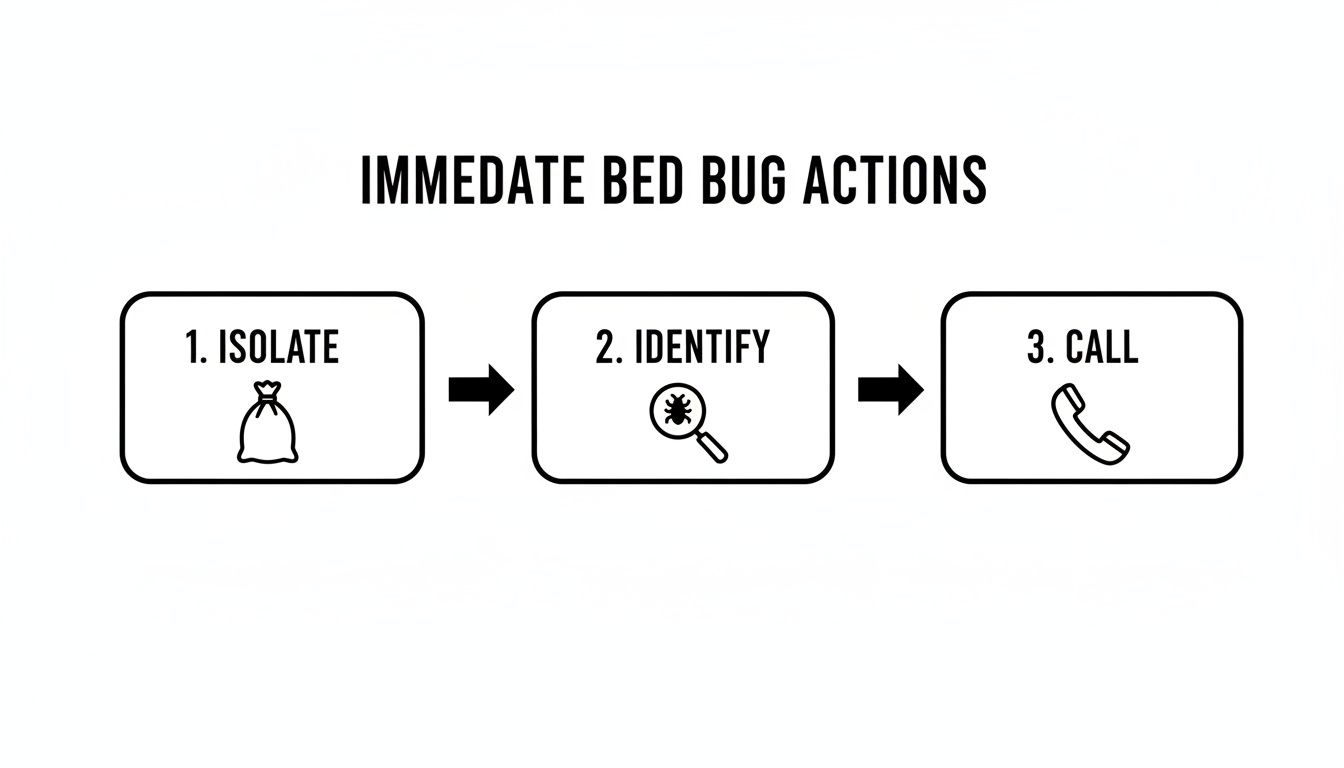
This simple process—Isolate, Identify, and Call—is the fastest and most effective way to get ahead of the problem. Once the bedding is sealed, leave all furniture exactly where it is. Moving a dresser or nightstand could dislodge hidden bugs and encourage them to find new hiding spots.
The final, and most important, step is to call for a professional inspection. The stress of dealing with bed bugs is immense, and you shouldn’t have to go through it alone. For a fast, professional bed bug removal in Tulsa area, contact Pathfinder Pest Control to schedule an inspection. An expert can confirm how widespread the problem is and give you a clear, effective plan to take back your home.
Conducting a Thorough Bed Bug Inspection in Your Home
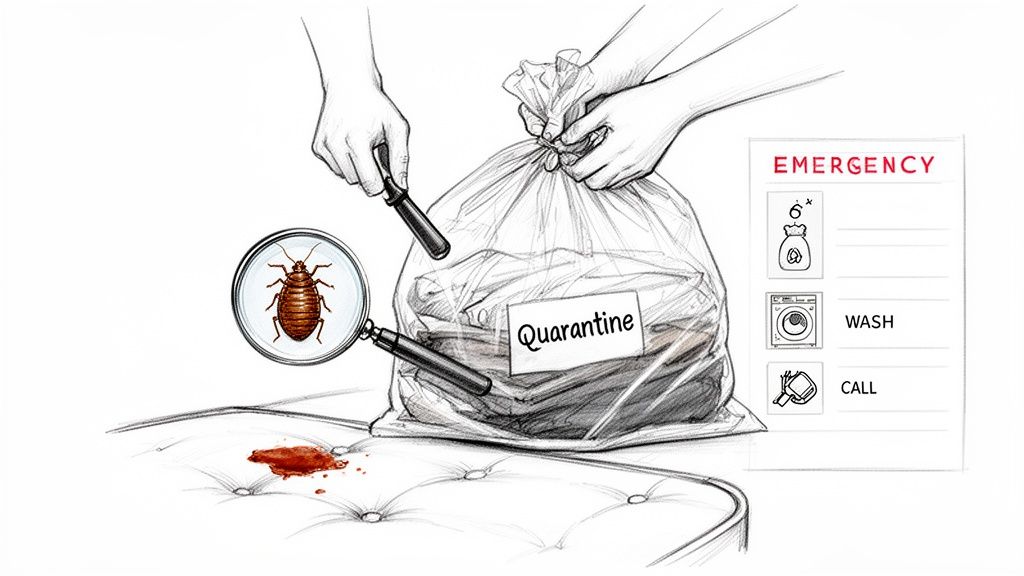
If you want to get rid of bed bugs fast, you have to think like one. These pests are masters of survival, genetically wired to stay hidden until it’s safe to feed. A quick glance at your mattress isn’t going to cut it. You need to approach this like a detective at a crime scene—methodically, patiently, and leaving no stone unturned.
Your mission is to uncover every single hiding spot, or “harborage,” to understand just how far the infestation has spread. This information is the foundation of any successful treatment, whether you’re tackling it yourself or calling us for backup. Miss even one pocket of survivors, and you’ll be right back where you started in a few weeks.
You won’t need much to get started, just a few simple tools: a bright LED flashlight, a magnifying glass, and something thin and stiff like an old credit card to probe into tight spaces.
Starting Your Search at the Epicenter: The Bed
Bed bugs prefer to live close to their food source, which, unfortunately, is you. That makes the bed ground zero. You need to systematically check every inch of the mattress, focusing on the seams, tufts, piping, and any tags where they love to cluster.
Once you’ve thoroughly checked the mattress, move on to the box spring. Take it completely off the frame and inspect it from top to bottom. Don’t forget to look inside; the dark, protected interior of a box spring is a five-star resort for bed bugs. Finally, take apart the bed frame and examine every joint, screw hole, and crevice in the headboard and footboard.
It might sound obvious, but a surprising number of people don’t know what they’re looking for. A 2025 poll revealed that a staggering 71% of Americans can’t correctly identify bed bugs. This confusion is a major reason infestations get out of control. You can learn more about these findings and public awareness of bed bugs to understand why spotting them early makes all the difference.
Expanding the Inspection Beyond the Bedroom
Here’s where many homeowners make a critical mistake: they stop at the bed. Bed bugs are notorious hitchhikers and will quickly spread to nearby furniture. To really grasp the scope of the problem, you need to inspect everything within a 5- to 15-foot radius of the bed.
Be sure to check these commonly overlooked hiding spots:
- Nightstands and Dressers: Empty every drawer and inspect them inside and out. Pay close attention to joints, corners, and the undersides where the furniture meets the floor.
- Upholstered Furniture: Any chairs or couches in the room are prime real estate. Check deep in the seams, under cushions, along the skirt, and within the frame itself.
- Curtains and Drapes: Examine the folds and seams, especially where the fabric bunches up at the top near the rod.
- Wall Hangings: Take down pictures, mirrors, and clocks. Inspect the backs of the frames and the wall behind them.
Pro Tip: When you get to electrical outlets, never stick anything metal inside. For safety, turn off the power at the circuit breaker first, then use a plastic tool or a can of compressed air to check for evidence without any risk.
Identifying the Telltale Signs of an Infestation
Knowing where to look is only half the battle; you also need to know what you’re looking for. An active infestation leaves several distinct clues. This table breaks down exactly what to watch for during your search.
Bed Bug Signs: What to Look For
This quick guide will help you identify the common signs bed bugs leave behind. Finding any of these is a clear confirmation of a problem.
| Sign | Appearance | Common Locations |
|---|---|---|
| Live Bugs | Small, flat, oval-shaped, and reddish-brown, about the size of an apple seed. Nymphs (babies) are tiny and nearly translucent. | Tucked into mattress seams, cracks in the bed frame, inside the box spring, and behind the headboard. |
| Fecal Spots | Small, dark brown or black specks that look like someone dotted the surface with a fine-point marker. They often bleed into fabric. | Mattress seams, pillowcases, sheets, and along furniture joints or baseboards. |
| Shed Skins | Translucent, yellowish, empty casings left behind as young bed bugs (nymphs) grow. They look like hollowed-out bed bugs. | Clustered in harborages like screw holes, mattress tufts, and deep inside furniture crevices. |
| Eggs | Tiny (about 1mm), pearly white, and often found in small clusters. They have a sticky coating that glues them to surfaces. | Hidden in fabric seams, wood cracks, and other protected, hard-to-see areas. |
Discovering any combination of these signs means you have an active infestation on your hands. The more signs you find, and the more places you find them, the more widespread the issue is. This detailed intelligence is your first and most critical step toward getting rid of bed bugs for good.
Your First Moves: DIY Bed Bug Control
Once you’ve confirmed you’re dealing with bed bugs and have the infested area contained, it’s time for a targeted counter-attack. While a professional is often the final piece of the puzzle, there are some powerful DIY steps you can take right now to knock down their numbers and get some immediate relief.
Think of this as your first line of defense. These actions will help you regain a sense of control and start making a real dent in the problem while you plan your next steps. The key is to stick with proven methods and steer clear of common mistakes that can actually make things worse.
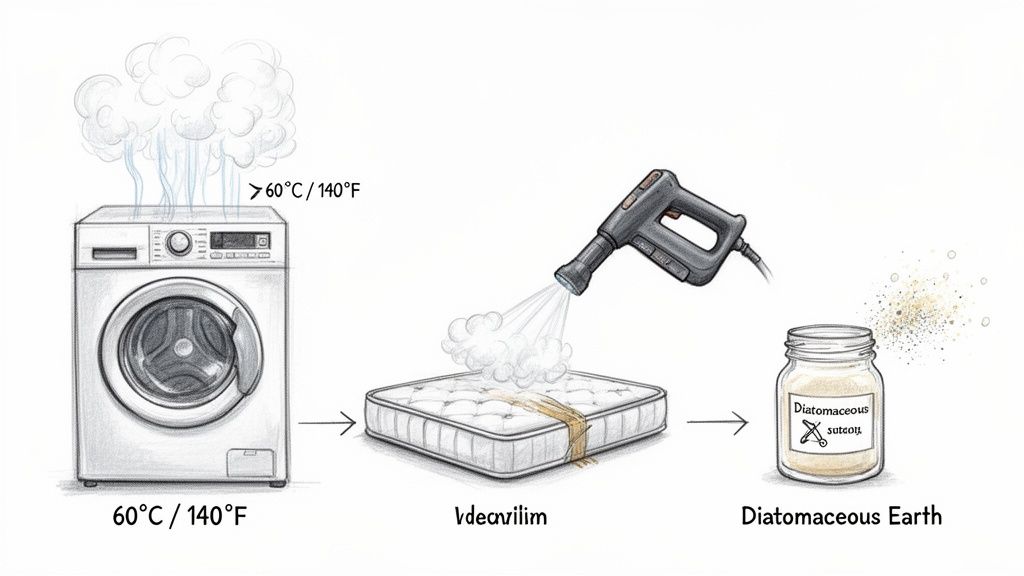
Your absolute best weapon in this fight is high heat. Bed bugs, from the tiniest eggs to the hardiest adults, simply can’t survive temperatures of 122°F (50°C) or higher. This is a critical weakness, and you can start exploiting it immediately with things you already have at home.
Using Heat: Laundry and Steam Are Your Best Friends
Your first and most effective move is to treat every washable item in the infested room. I’m talking bedding, curtains, clothes from the closet and drawers, even stuffed animals and decorative pillows.
Gather everything and transport it to the laundry room in sealed plastic bags. This is a crucial step to prevent any stray bugs from hopping off and starting a new colony somewhere else along the way.
The real magic doesn’t happen in the wash cycle; it’s the dryer that does the heavy lifting.
- Wash everything on the hottest water setting the fabric can safely take.
- Dry on high heat for at least 30-45 minutes. You need that sustained, high temperature to kill both the bugs and their eggs. Make sure every item is bone-dry and hot to the touch when the cycle is done.
What about things that can’t go in the washer, like your mattress, box spring, bed frame, or that upholstered chair in the corner? A good steam cleaner is your tool for the job. You’ll want a steamer that produces “dry” steam well above that lethal 122°F threshold.
Move the nozzle slowly and deliberately—about an inch per second—across every single surface. Pay extra close attention to seams, tufts, folds, and any little crevice where a bed bug might hide. The direct heat kills them and their eggs on contact.
A Quick Word of Caution: High-heat steam can sometimes damage wood finishes and might not penetrate really thick upholstery deep enough to be effective. Always test it on a small, hidden spot first and be careful.
Creating a Hostile Environment: Desiccants and Encasements
After you’ve hit them with heat, your next goal is to make the area completely inhospitable for any survivors. This is where non-chemical methods like diatomaceous earth (DE) come in, but you have to use it the right way.
It is absolutely critical that you use food-grade diatomaceous earth. The kind used for pool filters is completely different and is dangerous to inhale. Food-grade DE is a fine powder made from fossilized algae. To us, it’s just dust. To a bed bug, it’s like crawling through microscopic shards of glass that shred their waxy outer shell, causing them to dehydrate and die.
Apply a very thin, almost invisible layer in these key areas:
- Along baseboards and inside wall voids
- Behind electrical outlets (turn the power off at the breaker first!)
- In the joints and cracks of the bed frame
- Under the legs of furniture
The key is a light dusting. If you can see thick piles of it, so can the bed bugs, and they’ll just walk around it.
Finally, one of the smartest investments you can make right now is a set of high-quality mattress and box spring encasements. These aren’t just mattress protectors; they are specially designed zippered covers made of a fabric that bed bugs can’t bite through or escape from. An encasement traps any bugs still on your mattress inside, where they’ll eventually starve, while also preventing any new bugs from making a home there.
What You Should Avoid at All Costs
Knowing how to get rid of bed bugs fast is just as much about knowing what not to do. Many common over-the-counter products will do far more harm than good.
The biggest offender is the “bug bomb,” also known as a total release fogger. These cans spray a fine mist of pesticide into the air, but that mist almost never gets into the deep cracks and hidden voids where bed bugs are hiding.
Instead of killing them, the repellent in the fogger often just makes the bugs scatter. They flee the treated area and spread to other rooms, turning a localized problem into a house-wide nightmare. Pest control professionals are unanimous on this: bug bombs are one of the least effective tools against bed bugs and almost always make the infestation harder to solve. Don’t even think about it.
Why Professional Bed Bug Treatment Is Often Necessary
Trying to tackle a bed bug problem yourself can feel proactive, and it’s true that some DIY steps can make a difference. High-heat laundry cycles, diligent vacuuming, and even certain dusts will definitely knock down the population you can see. But there’s a massive difference between thinning the herd and wiping them out completely.
Let’s be honest: bed bugs are one of the toughest pests a homeowner will ever face. They are masters of survival, and their entire biology is built to withstand attacks. It has nothing to do with how clean your home is—it’s just a testament to how incredibly resilient these insects have become.
It’s a frustrating cycle we’ve seen countless times. A homeowner battles them for weeks, thinks they’ve won, and then the bites start up again. This happens because DIY methods almost never reach every last bug and egg, leaving just enough survivors to rebuild the entire infestation.
The Challenge of Insecticide Resistance
One of the biggest problems we face today is that bed bugs have grown resistant to the very chemicals designed to kill them. Decades of exposure to common, over-the-counter pesticides have essentially bred generations of “super bugs.”
When you use a store-bought spray, you might kill off the weakest bugs. The stronger, more resistant ones just shake it off. Those survivors then breed, passing their hardy genes to the next generation and creating an even tougher infestation in your home.
Key Insight: Relying solely on DIY chemical treatments can inadvertently breed a stronger, more resilient bed bug population in your home, making professional intervention even more critical for success.
This isn’t just a local issue. Bed bugs have made a dramatic comeback globally over the last 20 years. A 2025 survey found that 82% of pest professionals treated for bed bugs in the last year, with most infestations happening in single-family homes and apartments. You can learn more about the global resurgence of bed bugs to understand why this problem isn’t going away on its own.
Why DIY Efforts Often Fall Short
Beyond resistance, there are a few practical reasons why DIY methods just can’t get the job done. Bed bugs are expert hiders, and they multiply so fast that you’re constantly playing catch-up.
A professional strategy is built to overcome these specific challenges:
- Incomplete Coverage: Bed bugs squeeze into the tiniest spaces—behind baseboards, inside electrical outlets, and deep within furniture frames. Consumer-grade products simply can’t reach these hiding spots.
- Rapid Reproduction: Missing even one pregnant female is a critical failure. She can lay hundreds of eggs, and that’s all it takes to restart a full-blown infestation in a few months.
- Safety Concerns: Applying pesticides correctly requires training. Licensed technicians use EPA-approved products with precision, minimizing risks to your family and pets while maximizing effectiveness.
The Pathfinder Pest Control Advantage
When you’re wondering how to get rid of bed bugs fast, the most reliable answer is a professional plan. Here at Pathfinder Pest Control, we know the unique challenges Tulsa-area homeowners are up against, and we’ve built a proven system to take back your home for good.
Our licensed technicians don’t just show up and spray. We begin with an exhaustive inspection to map out every hiding spot and determine the true scale of the problem. This lets us build a targeted treatment plan that’s right for your home, not a generic, one-size-fits-all approach.
Our most effective tool is professional heat treatment. We use specialized equipment to raise the temperature in the infested rooms to between 122°F and 140°F. This lethal heat penetrates every crack, piece of furniture, and wall void, killing all life stages—from eggs to adults—in a single, comprehensive treatment. It’s faster and more thorough than any other method out there.
After the heat treatment, we apply targeted, EPA-approved liquid treatments to key areas. This one-two punch ensures any stragglers are eliminated and creates a protective barrier to prevent them from coming back. Working with a trusted local expert like Pathfinder Pest Control not only saves you the stress of a recurring bed bug nightmare but also delivers a guaranteed solution and the peace of mind you deserve.
Long-Term Prevention Strategies to Keep Bed Bugs Away
Getting rid of a bed bug infestation is a huge relief, but the job isn’t finished. The real victory comes when you make sure they never come back. After all the stress and work of treatment, a second round is the last thing anyone wants.
The good news is that keeping them out for good doesn’t have to be complicated. It’s all about building a few smart, proactive habits to make your home a much less appealing place for these pests. Bed bugs are expert hitchhikers; they’re almost always brought in from the outside. That makes vigilance your single most powerful weapon.
Developing Smart Travel Habits
Hotels, motels, and vacation rentals are notorious hotspots for bed bug transmission. Just a few precautions can drastically lower your risk of bringing home an unwelcome guest from your trip. Before you even think about unpacking, take five minutes to inspect your room.
Pull back the sheets and check the mattress seams, tufts, and tags, paying close attention to the head of the bed. Use your phone’s flashlight to get a good look at the headboard, nightstands, and even the luggage rack. If you spot any of the classic signs—live bugs, tiny dark stains, or shed skins—ask for a new room right away. Make sure it’s not next to, above, or below the original room.
When you settle into your room, stick to these simple rules:
- Never put your suitcase on the bed or any upholstered furniture. The safest spot is in the bathroom, preferably in the bathtub, or on a hard-surfaced luggage rack after you’ve inspected it.
- Keep your clothes zipped up in your suitcase instead of using the hotel dressers.
- When you get home, do not bring your luggage into your bedroom. Unpack in the garage, laundry room, or on a hard floor far away from where you sleep.
Immediately put all your clothes—even the clean ones—into a plastic bag and march them straight to the laundry. Wash and dry everything on the highest heat setting the fabric can handle. Finish by vacuuming your suitcase thoroughly, inside and out, before putting it away.
Fortifying Your Home Against Invaders
Beyond travel, basic home maintenance and a few mindful habits make a massive difference in bed bug prevention. The idea is to eliminate their favorite hiding spots and make your home easier to monitor.
One of the single most effective long-term tools is a set of high-quality mattress and box spring encasements. These aren’t just mattress protectors. A proper encasement is zippered shut, made from bite-proof and escape-proof material. It completely seals your mattress and box spring, which traps any hidden bugs inside to starve and stops new ones from getting in.
Expert Tip: An encasement simplifies inspections tenfold. Instead of checking countless seams and folds, you just have to scan the smooth, flat surface of the cover. You’ll spot trouble in seconds.
Mindful Practices for a Bed Bug-Free Home
Finally, be extremely careful about what you bring into your house. Second-hand furniture, especially couches, upholstered chairs, and bed frames, can be a Trojan horse for bed bugs. You must inspect used items meticulously in a well-lit area before they cross your threshold. Check every crack, crevice, and seam with a bright flashlight.
It’s also a great idea to seal up potential entry points and hiding places inside your home.
- Use caulk to seal cracks along baseboards, around window frames, and where utility pipes enter.
- Repair peeling wallpaper and tighten up any loose electrical faceplates.
- Cut down on clutter, particularly around your bed. Fewer hiding spots make inspections much faster and more effective.
These preventative measures are your best defense. By making them a regular part of your routine, you can dramatically lower the risk of another infestation and get back the peace of mind that comes with a pest-free home.
Answering Your Questions About Fast Bed Bug Removal
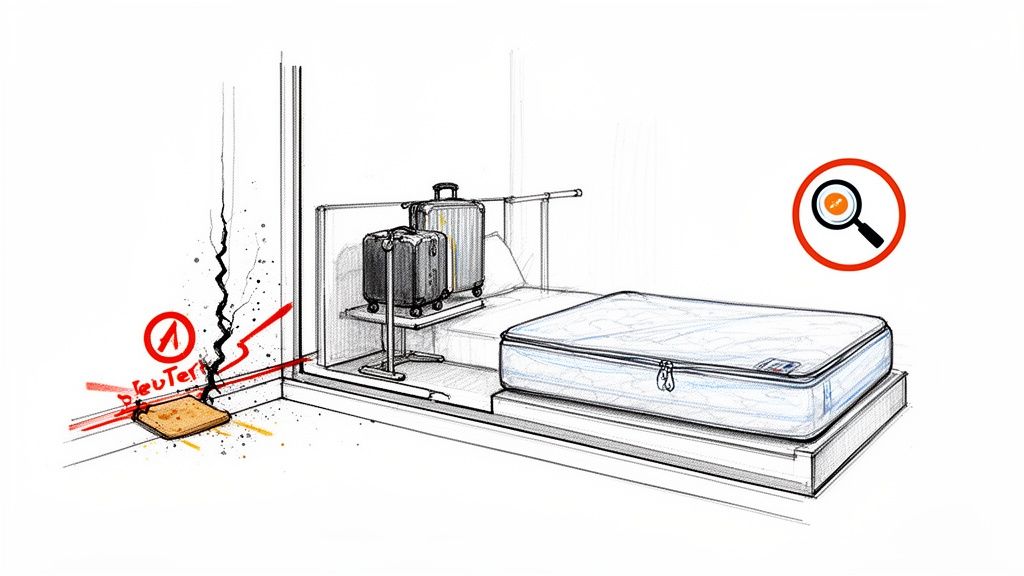
When you discover bed bugs, your mind starts racing. It’s a stressful situation, and it’s completely normal to feel overwhelmed and unsure of what to do next. Let’s walk through some of the most common questions we hear from Tulsa homeowners who need to get rid of bed bugs, fast.
Getting clear, straightforward answers is the first step toward reclaiming your peace of mind and making a confident decision. We’ll cover everything from safety to timelines and costs, so you know exactly what to expect.
How Long Does It Take to Completely Eliminate Bed Bugs?
This is always the first question, and for good reason: “How long until they’re gone?” The answer really comes down to the treatment method. DIY approaches can drag on for weeks, sometimes even months, with absolutely no guarantee of success because they often miss hidden bugs and their eggs.
Professional heat treatment, on the other hand, is a much faster and more definitive solution. A single, thorough heat treatment from a licensed pro can often resolve an entire infestation in just one day. That’s because the heat gets everywhere—inside walls, furniture, and even electronics—killing every single life stage on contact.
Key Takeaway: The single biggest factor in how fast you get rid of bed bugs is the treatment method. Professional heat treatment is, by far, the quickest and most reliable option for total eradication.
Are Professional Treatments Safe for My Family and Pets?
Of course, safety is the top priority. Reputable pest control companies use EPA-approved products and methods designed with your family and pets in mind. When it comes to heat treatments, the entire process is non-chemical. The only thing we introduce into your home is high temperature.
If a treatment plan includes targeted liquid applications, our trained technicians apply them with precision. We focus on cracks, crevices, and wall voids where pests hide, which minimizes any potential exposure. We will always give you clear instructions on any simple precautions, like stepping out of the house for a few hours.
What Is the Average Cost of Bed Bug Treatment?
The cost can vary quite a bit, so a single “average” price can be misleading. What you’ll ultimately invest depends on a few key factors:
- The size of the infested area: Treating a single bedroom is naturally going to cost less than treating an entire multi-story home.
- The severity of the infestation: A small, recently discovered problem is much easier and less costly to solve than a deeply entrenched, widespread one.
- The type of treatment selected: A full-home heat treatment has a different cost structure than a targeted chemical application.
While store-bought products might seem cheaper at first, they often fail. This leads to higher costs in the long run from buying more products and eventually needing to call a professional anyway. To dig deeper into pest control topics, you can explore more of our guides and learn more about pest management in our new articles.
The best approach is to get a professional inspection. We can give you an accurate, no-obligation quote that’s tailored to your specific situation, ensuring you know exactly what to expect.
When you need a fast, guaranteed solution to your bed bug problem, trust the local experts. Pathfinder Pest Control offers comprehensive inspections and proven treatments to eliminate bed bugs and give you back your home. Get your free estimate today.
Related Posts
Book Bed Bug Exterminator in Tulsa Today
If you suspect bedbugs in your home, professional help can eliminate the problem quickly. Our team provides trusted bed bug extermination in Tulsa with solutions tailored to your property.
Contact Pathfinder Pest Control today to schedule a bed bug inspection and protect your home with expert bed bug control in Tulsa.
Need More Help?

Mikkel Henderson
About The Author
Hi, I am Mikkel Henderson, owner of Pathfinder Pest Control. Over the years, I worked directly with homeowners and businesses in Tulsa. Me and my team helped them to get rid of all kinds of pests such as bed bug, cockroach, rodents, ants & termites.
On this website, I share real experience advice and write guides so you can better understand pest issues. In my free time, I like to spend time outdoors and enjoy a bit of fishing.