Your Complete Guide to a Bed Bug Inspection
By glen25
Published On January 14, 2026

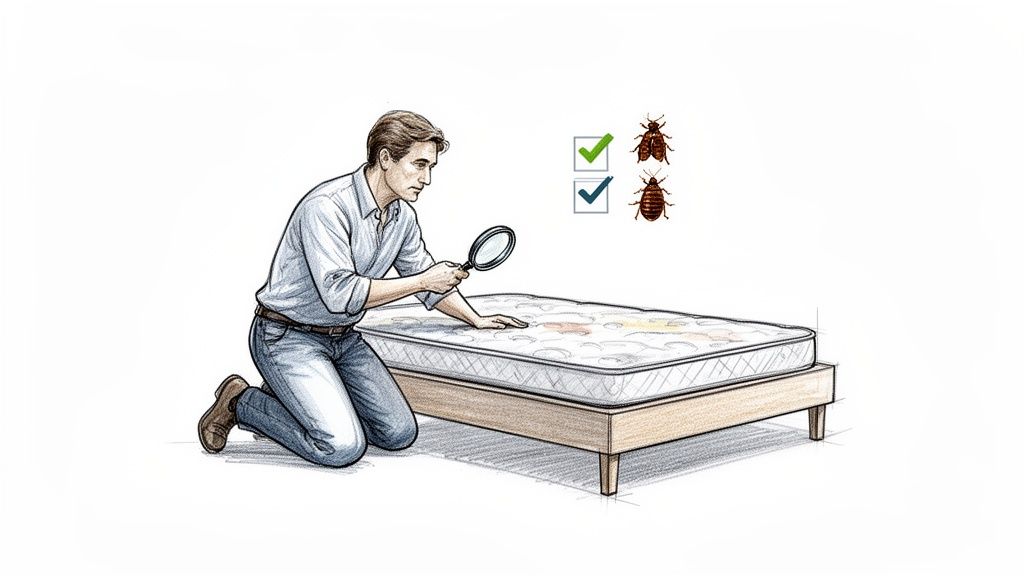
When you suspect you might have a bed bug problem, the first reaction is usually anxiety. That feeling—sparked by an itchy bite or a strange speck on your sheets—is completely understandable. But before you panic, the most important thing you can do is a thorough inspection. This initial check is the single most critical action to stop a small issue from exploding into a costly, full-blown infestation.
Think of an inspection as your battle plan. It gives you the clarity to tackle the situation head-on instead of guessing. Catching them early saves you time, money, and a whole lot of stress.
The Modern Bed Bug Challenge
Over the past 20 years, bed bugs have made a major comeback across the globe. This resurgence is fueled by things like increased international travel and their incredible knack for hitching rides in luggage, furniture, and clothing.
What makes them even tougher is that many have developed resistance to common insecticides like pyrethroids, which used to be the go-to solution. This has made many off-the-shelf sprays pretty much useless, forcing experts to double down on the importance of a detailed bed bug inspection as the first line of defense. You can find more details on this global issue from researchers at entomology.ucr.edu.
This new reality makes a proper inspection more crucial than ever. It accomplishes a few key goals right away:
- Confirms the Pest: It makes sure bed bugs are actually the problem, not other pests like carpet beetles or fleas that can cause similar irritation.
- Identifies Hotspots: A professional can pinpoint exactly where they’re hiding and figure out how far they’ve spread from the main spot.
- Guides Treatment: The findings from the inspection dictate the entire treatment strategy, making sure it’s targeted and effective.
An inspection isn't just about finding bugs; it's about understanding the problem's full scope. Without this crucial first step, any treatment is merely guesswork, which often leads to failure and re-infestation.
Your Path to a Solution
This guide will walk you through how to do your own initial check and explain when it’s time to call in a professional for a complete evaluation. A DIY check can help you gather early evidence, but a trained technician’s eye is invaluable for confirming the extent of the problem and making sure no hiding spot goes unchecked.
Starting with a proper inspection is the most logical and effective step toward reclaiming your home and your peace of mind.
How to Conduct a Thorough DIY Bed Bug Inspection
Think you might have bed bugs? Taking a deep breath and doing your own detailed inspection is the right first move. This isn't just a quick look around—it's a methodical search for hard evidence. Knowing exactly where to look and what to look for will give you the clarity you need to decide what to do next.
Think of yourself as a detective building a case. You'll need just a few simple tools for this investigation: a bright flashlight (the LED kind on your phone is perfect), a stiff, thin card like a credit card, and a few resealable plastic bags to collect any samples you find.
Start at the Epicenter: The Bed
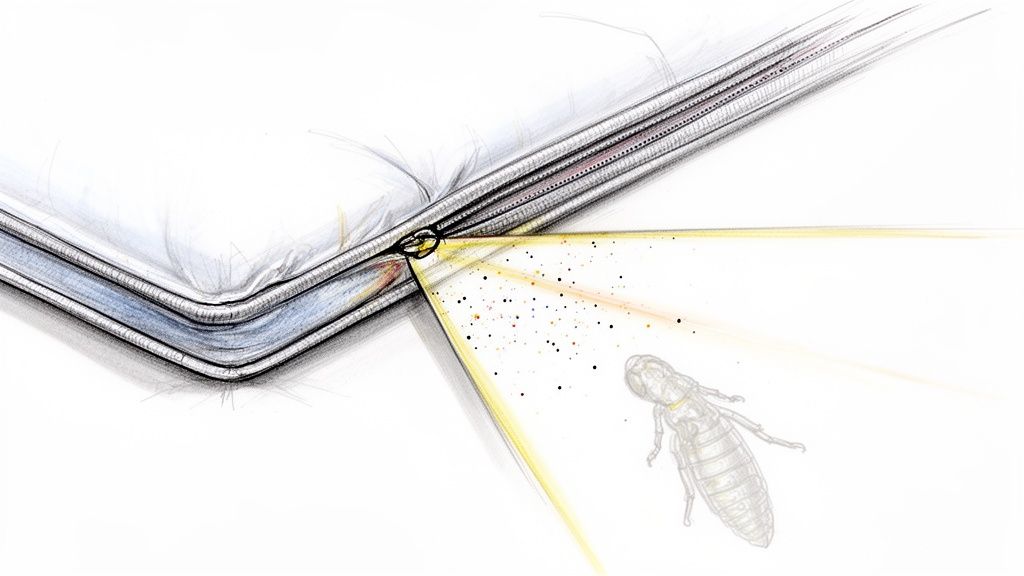
Since bed bugs are nocturnal and feed on sleeping hosts, they almost always hide as close to the bed as possible. The bed is ground zero, and it’s where your search should always begin. Start by stripping the bed completely—sheets, pillowcases, blankets, everything.
As you take the linens off, check them carefully for small, dark fecal spots or tiny rust-colored blood stains. If you see anything suspicious, immediately seal the items in a plastic bag. This prevents spreading any bugs or eggs before you wash them in the hottest water possible.
Now, it's time to focus on the mattress itself. Pay extremely close attention to these key hiding spots:
- Seams and Piping: Methodically run your flashlight along every single seam, fold, and tuft. Use your credit card to gently probe inside these crevices. Bed bugs love to wedge themselves into these tight, protected areas.
- Mattress Tags: Don't forget to lift and check under all the manufacturer and law tags. They provide a perfect, undisturbed shelter.
- Zippered Encasements: If your mattress has a protective cover, inspect the entire zipper line. Bed bugs often cluster along the zipper teeth.
A common mistake is just checking the top of the mattress. Bed bugs are experts at hiding in dark, out-of-the-way places. A proper inspection means examining every inch of that mattress, top to bottom.
Broaden Your Search Beyond the Mattress
Once you’ve given the mattress a thorough once-over, move on to the box spring. If it has a fabric dust cover stapled to the bottom, you absolutely need to peel back the corners or remove it entirely. The inside of that wooden frame is one of the most common hiding spots we find.
The bed frame and headboard are next. Shine your light into every joint, screw hole, and crack. If the headboard is mounted on the wall, check the space behind it. Any gap, no matter how tiny, is a potential hideout.
Expand the Inspection Zone
Bed bugs don’t stay put forever. As an infestation grows, they migrate to find new places to hide. Your search needs to radiate outward from the bed into the rest of the room.
Start with furniture right next to the bed, like nightstands and dressers. You'll need to empty the drawers and inspect them inside and out, especially the corners and joints. Be sure to flip the furniture over to check the underside, too.
Next, get down on the floor and inspect the room’s perimeter.
- Check the gap between the carpet and the wall.
- Inspect along the baseboards, using your card to probe any cracks.
- Examine the electrical outlet plates. Carefully unscrew them and look behind them, but be sure not to touch any wiring.
Finally, check the less obvious spots. People are often surprised to learn that bed bugs can be found behind peeling wallpaper, inside smoke detectors, and even in the spines of hardcover books sitting on a nightstand.
To keep your search organized, I've put together a checklist that follows the same path a professional would. It breaks down where to look and what you’re looking for.
DIY Bed Bug Inspection Checklist
This table organizes your search from the most likely hotspots to the less common ones, ensuring you don't miss a thing.
| Inspection Zone | What to Look For | Tools Needed |
|---|---|---|
| Bedding & Linens | Reddish blood stains, dark fecal spots resembling ink dots | Magnifying glass, plastic bags |
| Mattress | Live bugs, shed skins, eggs, and fecal spots in seams, tufts, and under tags | Flashlight, credit card, magnifying glass |
| Box Spring | Evidence inside the frame, especially where the fabric cover staples to the wood | Screwdriver (to remove fabric), flashlight |
| Bed Frame & Headboard | Bugs and eggs in joints, screw holes, and cracks; check behind mounted headboards | Flashlight, credit card |
| Nearby Furniture | Signs inside drawers, along joints, and on the underside of nightstands and dressers | Flashlight |
| Room Perimeter | Activity behind baseboards, under carpet edges, and behind electrical outlet covers | Screwdriver, credit card, flashlight |
Completing this methodical search gives you a clear picture of what you’re dealing with. Finding even one definitive sign is enough to confirm it's time to bring in a professional. While this DIY inspection is a fantastic tool for assessment, it’s not a substitute for a professional diagnosis. The evidence you've gathered will be incredibly helpful when you contact a pest control expert like Pathfinder Pest Control.
Recognizing the Telltale Signs of Bed Bugs
Knowing what you’re looking for is half the battle in any bed bug inspection. These pests are incredibly secretive and masters of hiding, but they always leave evidence behind. Learning to spot these clues will help you distinguish a real bed bug problem from other household issues, giving you the confidence to take the next step.
Most people think they need to find a live bug to confirm an infestation. That's not always true. In fact, seeing an adult bug often means the problem has been brewing for a while. The earliest evidence is usually far more subtle.
The Most Common Evidence You Will Find
Your search should focus on finding five distinct types of physical evidence. Think of it like a crime scene investigation—each piece of evidence tells part of the story of what’s happening in your home. Some signs are easy to mistake for something else, while others are unmistakable proof.
Here are the primary signs you should be looking for during your inspection:
-
Dark Fecal Spots: This is often the most common and reliable sign you’ll find. Bed bug droppings are digested blood, appearing as small, dark spots that look like someone dotted a surface with a black felt-tip marker. Unlike regular dirt, these spots will smear if you wipe them with a wet cloth. You'll usually find them clustered in their hiding places, like along mattress seams, on the box spring, or in the joints of a bed frame.
-
Shed Skins: As bed bugs grow from nymphs to adults, they shed their exoskeletons in a process called molting. These cast skins look like hollow, translucent versions of the bugs themselves. Finding these delicate, light-brown shells is a sure sign of an active, growing infestation.
Many homeowners mistake shed skins for dead bugs, but they are a critical indicator that nymphs are present and developing. Discovering multiple skins of varying sizes suggests an established population with different life stages.
Distinguishing Definitive Proof from Suggestive Clues
While fecal spots and shed skins are clear indicators, other signs can be a bit more ambiguous. It’s important to understand the difference between definitive evidence and clues that just suggest a problem might exist.
Finding live bugs, of course, is the most direct proof. Adult bed bugs are small, flat, reddish-brown insects about the size of an apple seed. Younger nymphs are smaller, nearly translucent, and much harder to spot. You might also find their eggs, which are tiny, pearl-white, and about the size of a pinhead. They are usually laid in tight clusters in dark crevices.
What About Bed Bug Bites?
Waking up with itchy, red welts is often the first thing that makes someone suspect bed bugs. Bites are a major warning sign, but on their own, they are not definitive proof of an infestation.
Bites from fleas, mites, and even certain allergic reactions can look very similar. While bed bug bites often appear in lines or small clusters of three—sometimes called "breakfast, lunch, and dinner"—this pattern isn't always there. People react differently; some may have severe welts, while others show no reaction at all.
Because of this variability, treat bites as a prompt to conduct a thorough bed bug inspection for more concrete evidence. Rely on the physical signs—the spots, skins, eggs, or live bugs—to confirm your suspicions. Finding even one of these definitive signs means it's time to stop searching and call a professional.
When Your DIY Search Isn't Enough
Sometimes, a do-it-yourself inspection leaves you with more questions than answers. You’ve torn the bedroom apart, checked the mattress seams, peered behind the headboard, and emptied the nightstand, but that nagging feeling of uncertainty just won't go away.
This is a really common and frustrating point in the process. It's also a clear signal that it’s time to call in a professional. Bed bugs are masters of concealment, and an early-stage infestation can be incredibly subtle—often just a few bugs or eggs tucked away in a deep, inaccessible crack. For the untrained eye, spotting this minimal evidence is like trying to find a needle in a haystack.
Scenarios That Demand a Professional Eye
If you find yourself in one of these situations, your DIY efforts have done their job by raising a red flag. The next logical step is a professional bed bug inspection to get a definitive answer.
- You Found Just One Piece of Evidence: Discovering a single shed skin, one lone fecal spot, or what you think might be a bug is a big deal. It’s tempting to hope it’s just a fluke, but it’s far more likely to be the first sign of a larger, hidden population.
- You Suspect a Problem But Find Nothing: Persistent itchy bites or just a gut feeling that something is wrong, even after a fruitless search, shouldn't be ignored. Professionals have seen it all and can often identify clues that don't seem obvious to homeowners.
- An Infestation in a Neighboring Unit: If you live in an apartment, condo, or duplex and a neighbor has a confirmed bed bug issue, you are at extremely high risk. Bed bugs easily travel through wall voids, electrical conduits, and shared plumbing, making a professional inspection of your unit essential for catching them early.
This quick decision guide can help you visualize when to make the call.
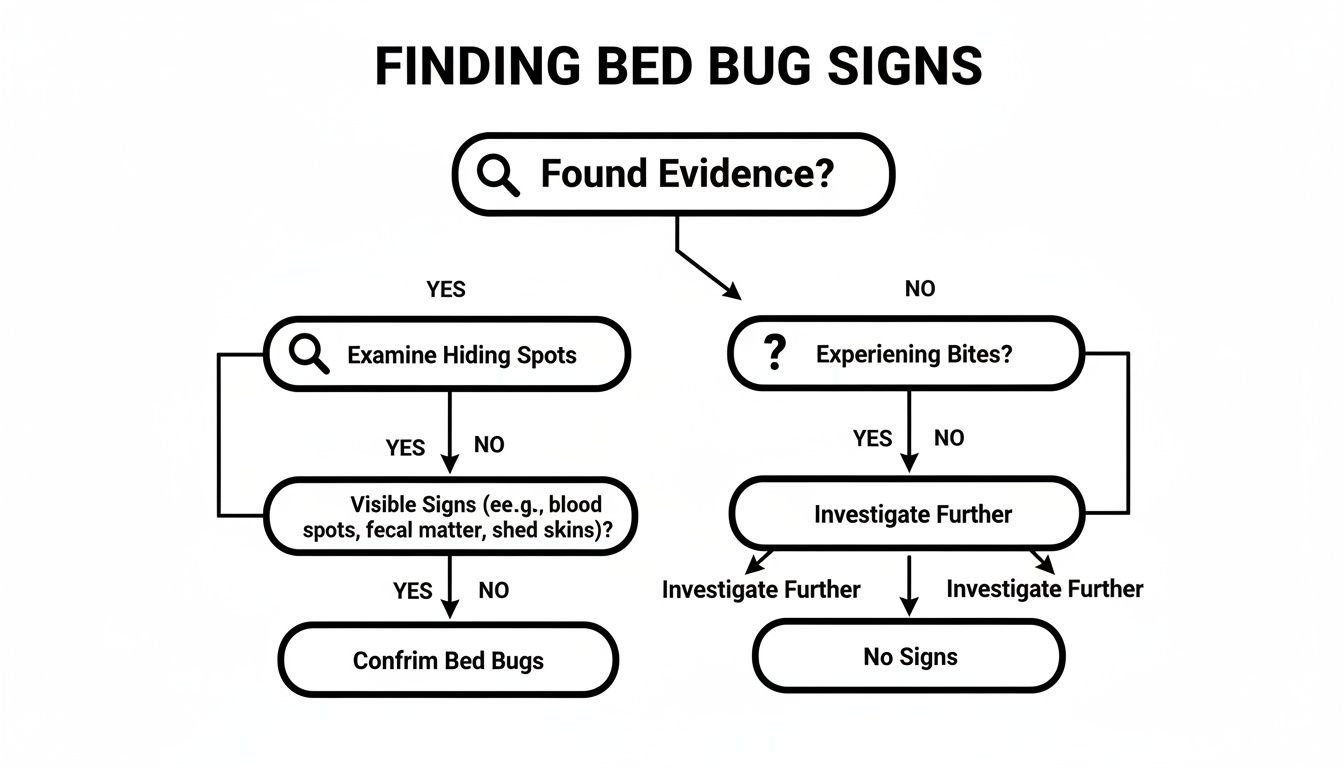
As the flowchart shows, whether you find hard evidence or just have a strong suspicion, a professional consultation is the most reliable path forward.
Why Professional Expertise Matters
Calling a professional isn't about giving up; it’s about using expertise to save yourself time, money, and a whole lot of stress. A trained technician from Pathfinder Pest Control brings knowledge and tools that go way beyond a flashlight and a credit card.
They understand the specific behavioral patterns of bed bugs right here in the Tulsa area. This local knowledge is crucial because environmental factors can influence where pests hide and how they spread. More importantly, their systematic approach ensures no potential hiding spot gets overlooked, from the deepest corners of a box spring to the voids behind baseboards.
Wasting money on ineffective DIY sprays and foggers is a common pitfall. These products often fail to eliminate the entire population and can even cause the bugs to scatter, making the infestation harder to treat. A professional diagnosis is the most cost-effective first step.
The reality is that bed bug reports have seen sharp spikes in recent years. Orkin's 2023 Top 50 Bed Bug Cities List crowned Chicago #1 for the third straight year, and data from the National Pest Management Association reveals that 97% of pest specialists handled bed bug issues in the past year. The most common sites? Single-family homes (91%) and apartments (89%).
For residents in Tulsa County, including neighborhoods in Jenks and Broken Arrow, these national trends highlight a clear local vulnerability. This is where an expert bed bug inspection truly shines—technicians use Integrated Pest Management (IPM) principles to meticulously inspect mattresses, furniture, and baseboards for the subtle signs you might have missed.
The Pathfinder Pest Control Advantage
When you schedule an inspection with us, you’re not just getting a quick visual check. You’re getting a comprehensive assessment designed to provide a complete picture of what's going on. Our licensed technicians are trained to identify all life stages of bed bugs—from the nearly invisible eggs to nymphs and adults.
We methodically inspect all the high-risk zones, including:
- Upholstered furniture and curtains
- Behind picture frames and wall hangings
- Inside electrical outlets and smoke detectors
- Along the edges of carpeting and under rugs
After the inspection, we give you a detailed report of our findings and recommend a clear, customized treatment plan if an infestation is confirmed. This professional confirmation is the only way to ensure you’re using the right solution for the problem, preventing the infestation from getting worse while you experiment with home remedies. Your peace of mind is worth the call.
Preparing for a Professional Bed Bug Inspection
So, you've scheduled a professional visit. What's next? Taking a few simple steps beforehand can make the bed bug inspection much more effective. It helps the technician access all the potential hiding spots so they can give you the most accurate diagnosis possible.
Don't worry, this isn't about deep cleaning your entire house. It’s more about strategic prep to give our team a clear path for a thorough search.
The main goal is simply to reduce clutter. Piles of clothes, stacks of books, or crowded storage areas near walls and furniture create barriers. By clearing these items away, you give the technician a direct line of sight to baseboards, bed frames, and other critical inspection zones.
But it's just as important to know what not to do. The single biggest mistake we see homeowners make is moving items from the suspected room to other parts of the house before an inspection. This can accidentally spread bed bugs, turning a localized issue into a much larger, more difficult problem.

What to Expect During the Technician's Visit
A professional inspection is a systematic process. It’s designed to be as non-disruptive as possible while still being incredibly detailed. It usually starts with a brief chat. The technician will ask you about what you've seen, where you've noticed bites, and any DIY steps you might have already tried.
After that conversation, the hands-on inspection begins. Here’s a quick rundown of what our technicians do:
- Systematic Search Pattern: They start at the epicenter—usually the bedroom—and work their way outward, checking every potential hiding spot.
- Specialized Tools: They use high-powered flashlights, magnifying tools, and probing instruments to check tiny cracks and crevices you’d easily miss on your own.
- Thorough Examination: Key areas include the mattress, box spring, bed frame, headboard, nearby furniture, baseboards, and even behind electrical outlets and picture frames.
An expert inspection is far more than a quick look-around. It’s an investigative process that follows the evidence, no matter how small, to uncover the full scope of an infestation. This detailed approach is what leads to a successful treatment plan.
This process is built on proven methods that have been critical in controlling outbreaks. Technicians know where to look because experience and data tell them bed bugs are found in 91% of single-family homes and 89% of apartments they inspect. For Tulsa homeowners and businesses, Pathfinder Pest Control’s EPA-approved methods start with this meticulous inspection. We focus on high-risk zones like upholstered furniture and electrical outlets to confirm activity and build an effective eradication strategy. You can read more about how these inspection methods have curbed infestations at phys.org.
From Inspection Findings to a Treatment Plan
Once the physical inspection is done, the technician will give you a complete report of their findings. This report will confirm whether bed bugs are present, pinpoint the specific locations where they found evidence, and assess how severe the infestation is.
This clarity is empowering. You'll go from suspicion and uncertainty to having a clear diagnosis and a concrete plan of action.
If we confirm an infestation, the technician will use their findings to recommend a customized treatment plan tailored specifically to your home's layout and the infestation's size. They will walk you through the proposed treatment, explain the methods involved, and answer any questions you have. We want to make sure you're an informed and confident partner in the process of reclaiming your home.
If you have any questions before your scheduled visit, feel free to contact our team at Pathfinder Pest Control for guidance.
Common Questions About Bed Bug Inspections
Even after checking every nook and cranny yourself, it's totally normal to have questions about what a professional inspection involves. Getting straight answers helps you feel more in control and ready for what comes next. Let's walk through some of the biggest concerns homeowners have right before they pick up the phone.
First, let's clear up a major myth: having bed bugs does not mean your home is dirty. That idea is completely false. Bed bugs couldn't care less about dirt or grime; they're drawn to warmth, the carbon dioxide you breathe out, and, well, blood. They are equal-opportunity pests that show up in five-star hotels just as easily as they do in any home.
How Long Does a Professional Inspection Take?
One of the first things people ask is how much time they need to set aside. While every property is a bit different, a thorough inspection of a typical single-family home usually takes somewhere between 30 minutes and an hour.
Of course, for larger homes or more complex situations like an apartment building, it might take longer. The goal isn't to be fast—it's to be right. Our technicians meticulously check every potential hiding spot to get a complete picture before they even think about recommending a treatment.
Are Canine Inspections Better Than Human Inspections?
You've probably heard about bed bug sniffing dogs, and for good reason—they can be incredibly effective. A highly trained canine team can detect bed bugs with an accuracy rate of over 95%, often much faster than a human inspector can. Their powerful sense of smell lets them zero in on live bugs and viable eggs, even if they're hidden deep inside a wall or piece of furniture.
That said, a visual inspection by a trained human technician is just as critical for confirmation. A human inspector can spot the other signs of an infestation, like shed skins and fecal stains, which a dog might not signal.
Key Takeaway: Both canine and human inspections are powerful tools in our arsenal. Canine inspections are fantastic for quickly clearing large areas or finding low-level infestations, while human inspections are essential for visual confirmation and understanding the full scope of the problem. At Pathfinder Pest Control, we use the right tool for your specific situation.
What Does a Bed Bug Inspection Cost in Tulsa?
The cost of a professional bed bug inspection can depend on a few things, mainly the size of your property and whether a canine unit is needed. Some companies charge a separate fee for the inspection, but many, including Pathfinder Pest Control, will often credit that fee toward the cost of treatment if we confirm you have a problem.
Try to think of the inspection fee less as a cost and more as an investment. It gives you a definite diagnosis, which stops you from wasting time and money on DIY products that often just make the problem worse. Gaining clarity and a professional plan of action is the most valuable thing you can get. To learn about other common household pests, you can explore the helpful articles in Pathfinder Pest Control's learning center.
A professional inspection is the quickest, most reliable way to get answers and get your peace of mind back. If you even think you might have a bed bug problem, don't wait for it to get worse. Contact Pathfinder Pest Control today to schedule your comprehensive inspection and get on the path to a solution.
Article created using Outrank
Related Posts
Book Bed Bug Exterminator in Tulsa Today
If you suspect bedbugs in your home, professional help can eliminate the problem quickly. Our team provides trusted bed bug extermination in Tulsa with solutions tailored to your property.
Contact Pathfinder Pest Control today to schedule a bed bug inspection and protect your home with expert bed bug control in Tulsa.
Need More Help?

Mikkel Henderson
About The Author
Hi, I am Mikkel Henderson, owner of Pathfinder Pest Control. Over the years, I worked directly with homeowners and businesses in Tulsa. Me and my team helped them to get rid of all kinds of pests such as bed bug, cockroach, rodents, ants & termites.
On this website, I share real experience advice and write guides so you can better understand pest issues. In my free time, I like to spend time outdoors and enjoy a bit of fishing.